CCurtis D.Verified Buyer
Item: 1x Protractor
Fitted crown molding in a 1920s house where not one corner was square. Set this in the corner, read the number, dialed the saw. Every joint closed up tight.
2 weeks agoYour cart is empty
Add items to get started
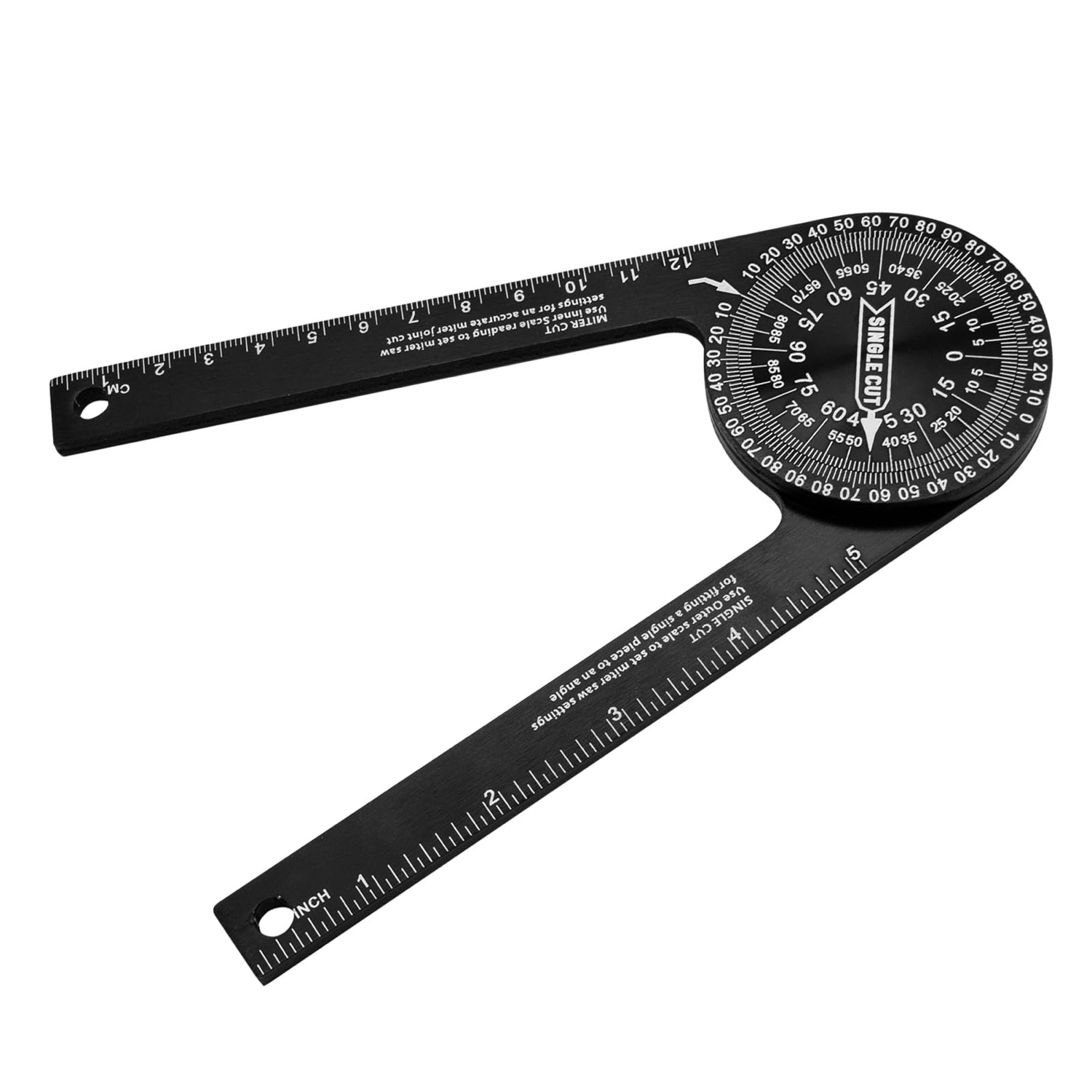
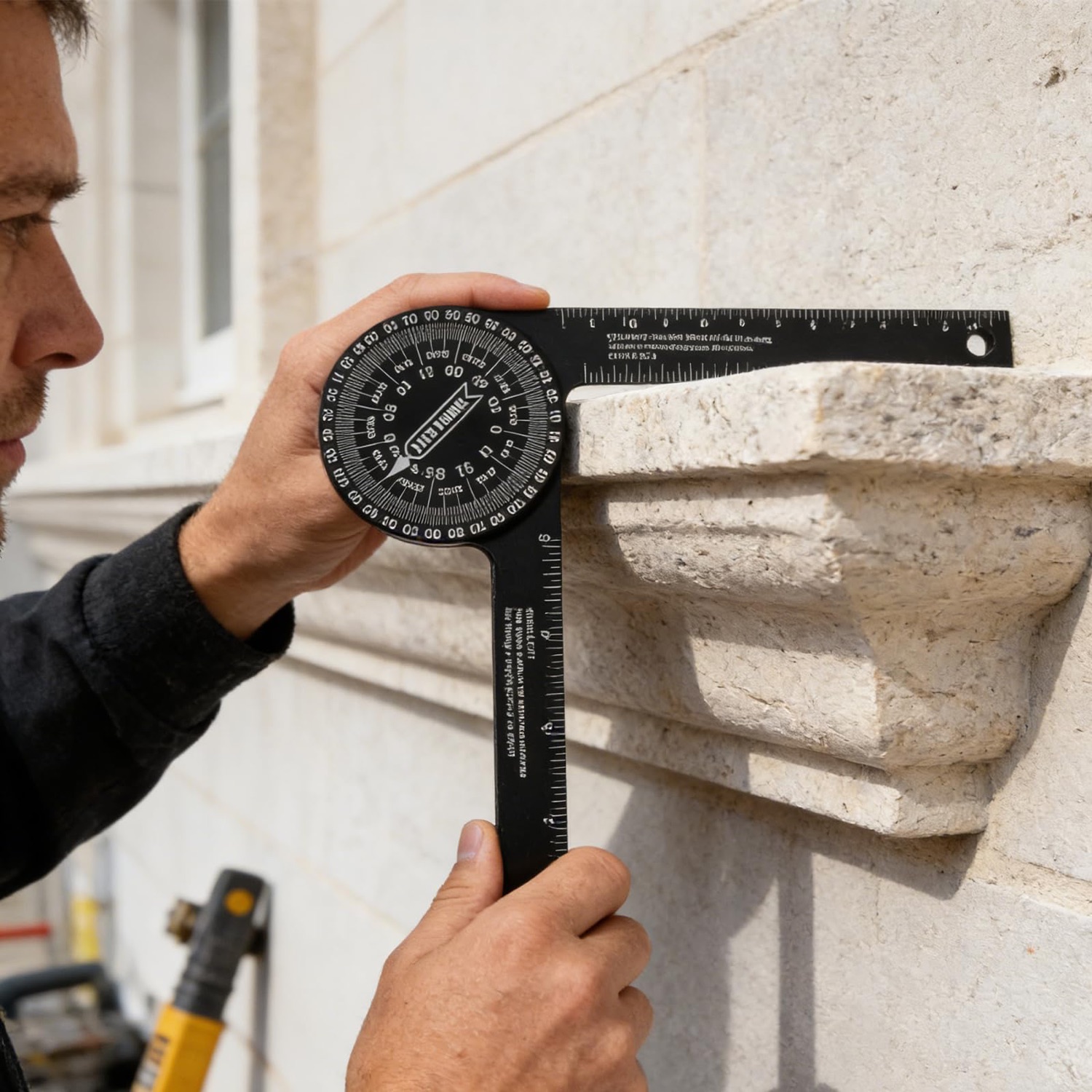
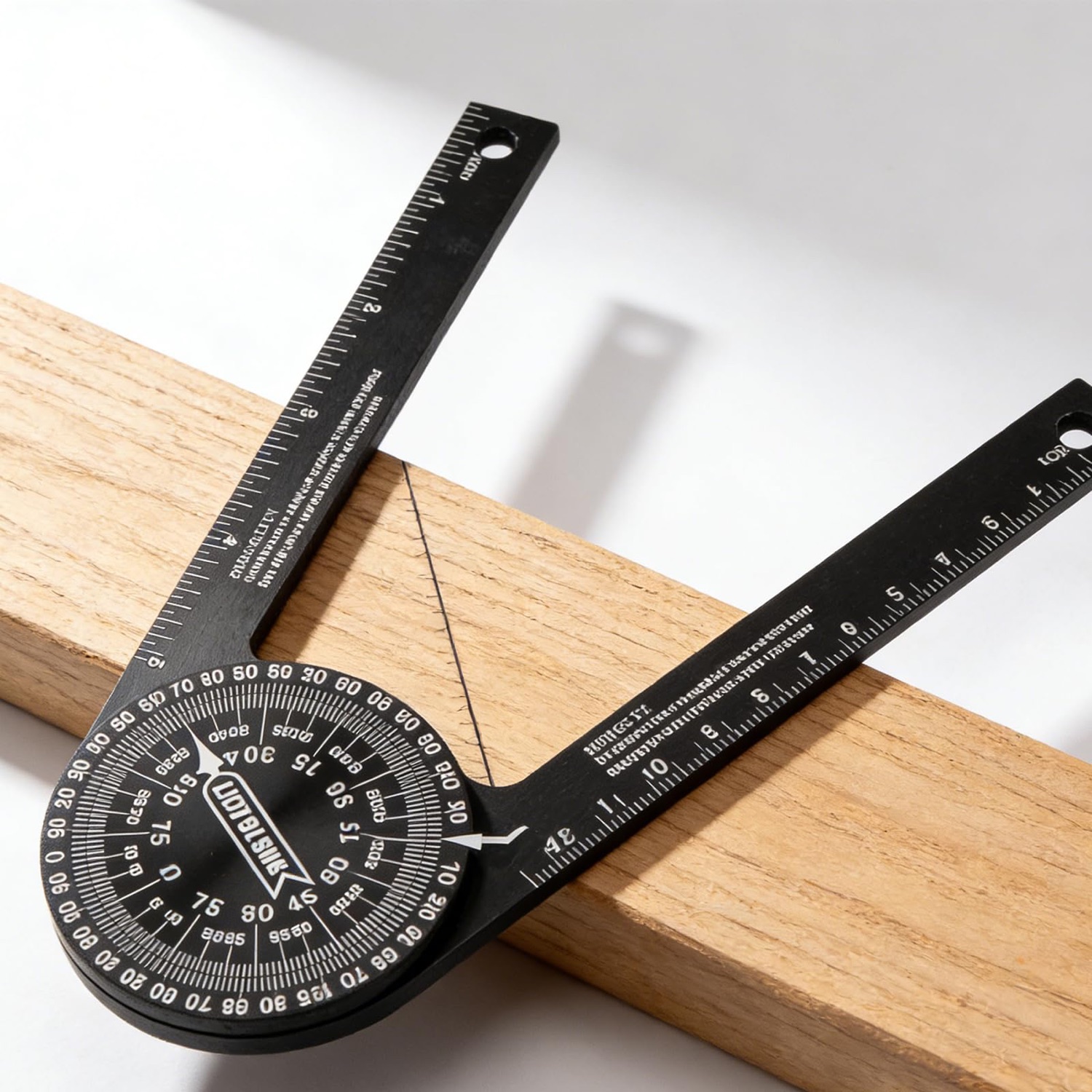
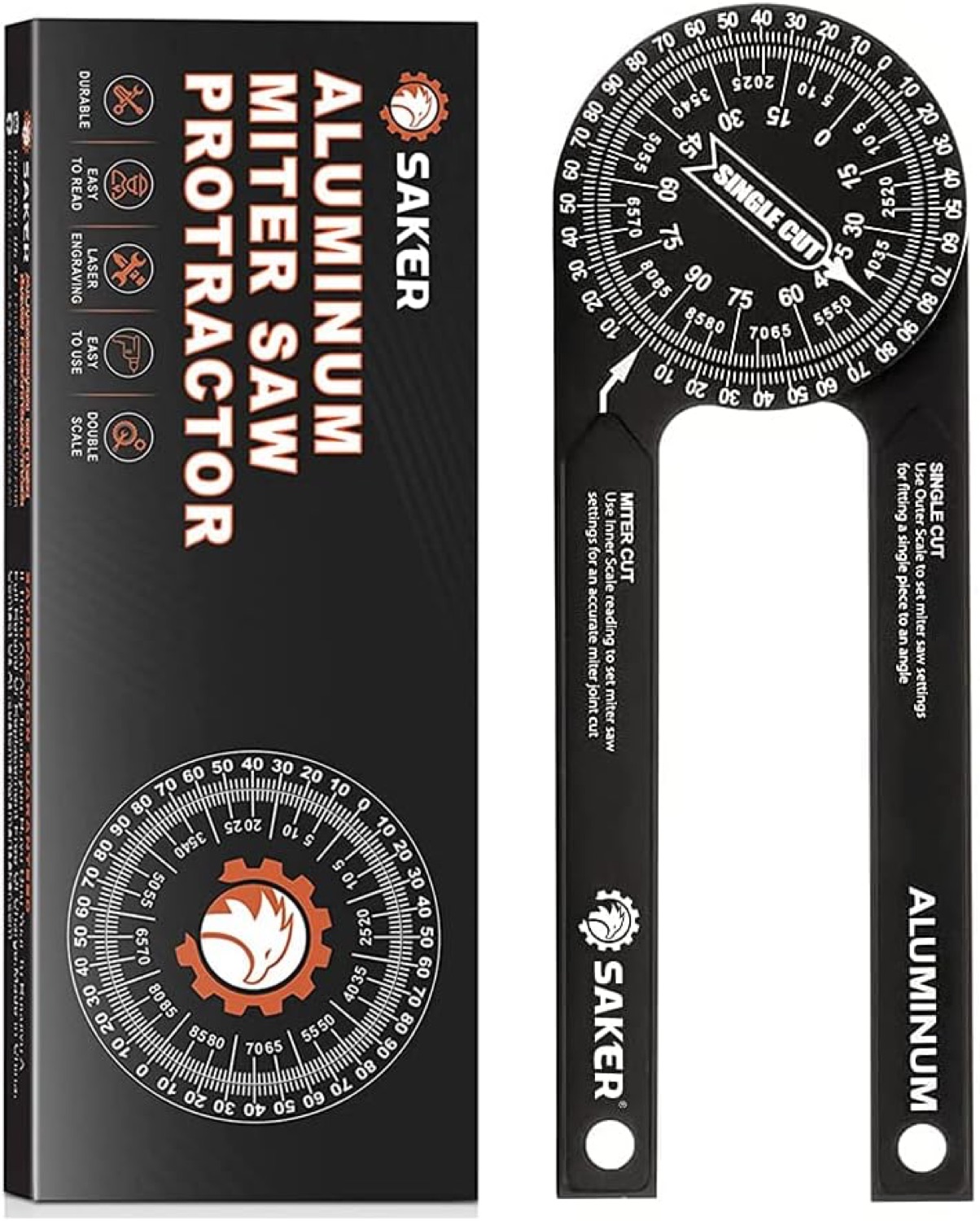
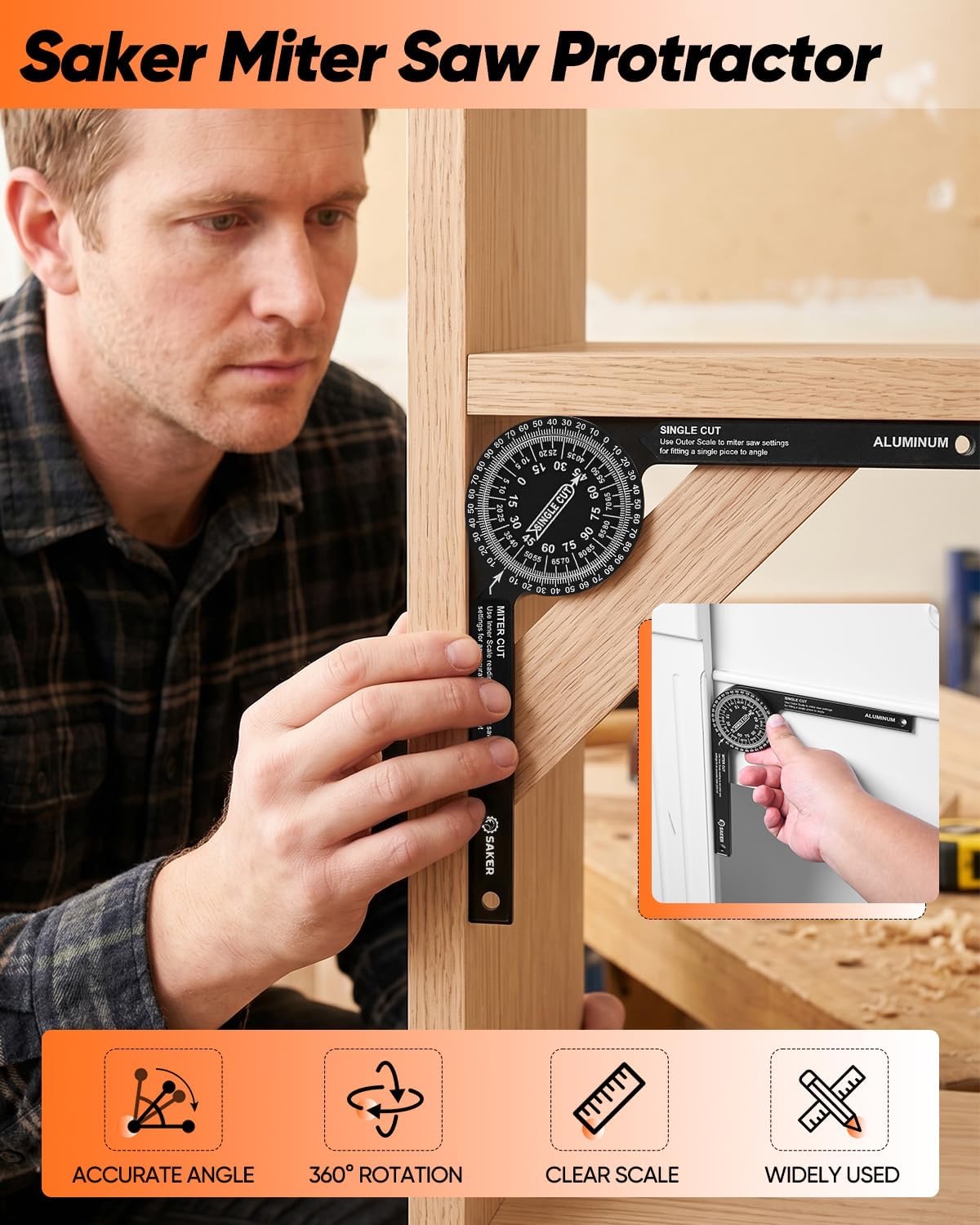

Official StoreAluminum Miter Saw Protractor

Fitted crown molding in a 1920s house where not one corner was square. Set this in the corner, read the number, dialed the saw. Every joint closed up tight.
2 weeks agoI'm the one in our shop who is bad at maths and this thing quietly solved it. No dividing angles in half in my head anymore.
3 weeks agoThe closed frame is the whole trick. My old plastic one flexed when I pressed it into a corner and the reading drifted. This one doesn't move.
4 weeks agoReads clean and the engraving is sharp. Would like the numbers a touch bigger for my eyes, otherwise no complaints at all.
5 weeks agoBaseboard in a whole basement. Lives in my back pocket, takes a beating in the truck, still reads the same as the day it arrived.
3 weeks agoPlumber, not a carpenter. Use it for pipe angles more than trim. Sturdy bit of aluminium and it hasn't picked up any rust in a wet crawlspace.
6 weeks agoBought it after wasting a length of expensive oak on a guessed angle. Paid for itself on the first cut, honestly.
2 weeks agoDoes exactly what it says. Took me one corner to understand which scale to read — after that it's obvious and quick.
7 weeks agoStop doing trigonometry on the job site — read the angle and cut it
No calculation, no guesswork, no wasted trim.
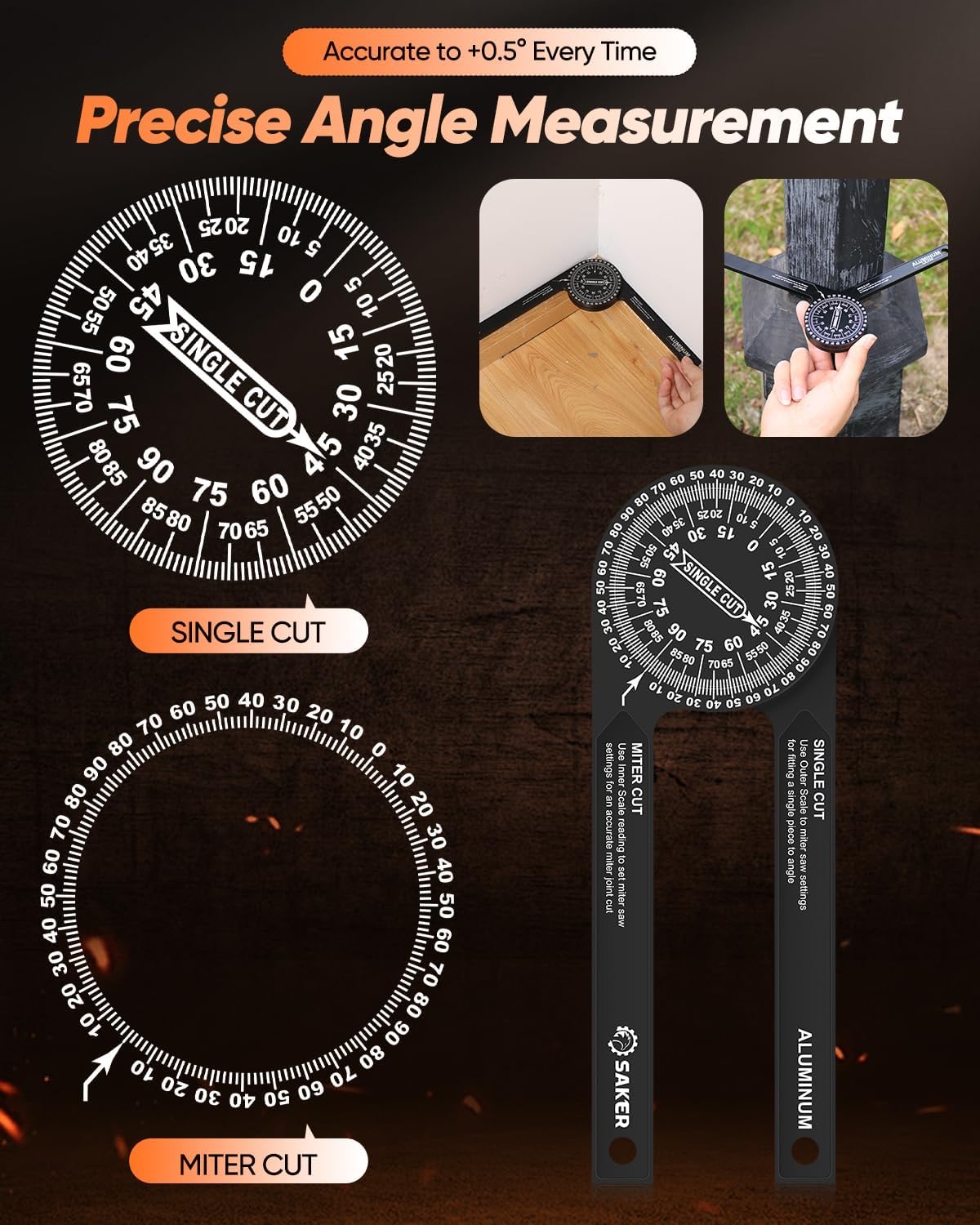
Set the protractor into the corner and read the miter angle directly off the scale.

Old way: measure the corner, halve the angle, second-guess yourself, cut, test-fit, do it again. This protractor gives you the miter angle to set on the saw directly.
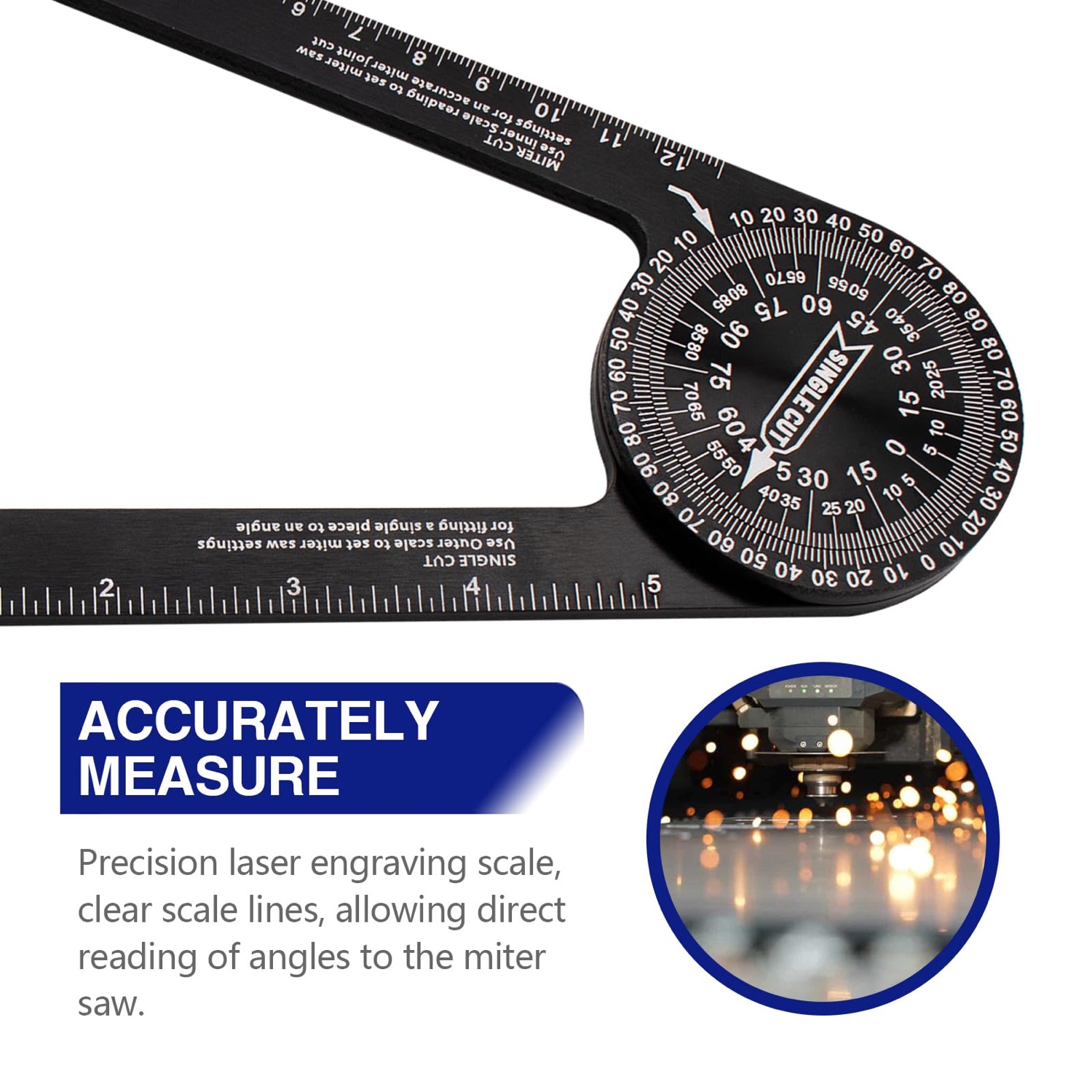
Laser-engraved graduations are crisp and easy to read, and they don't wear off like printed markings do.


The one-piece “O” shape sits flush against both surfaces so nothing flexes while you take the reading — the difference between a joint that closes and one that shows a gap.
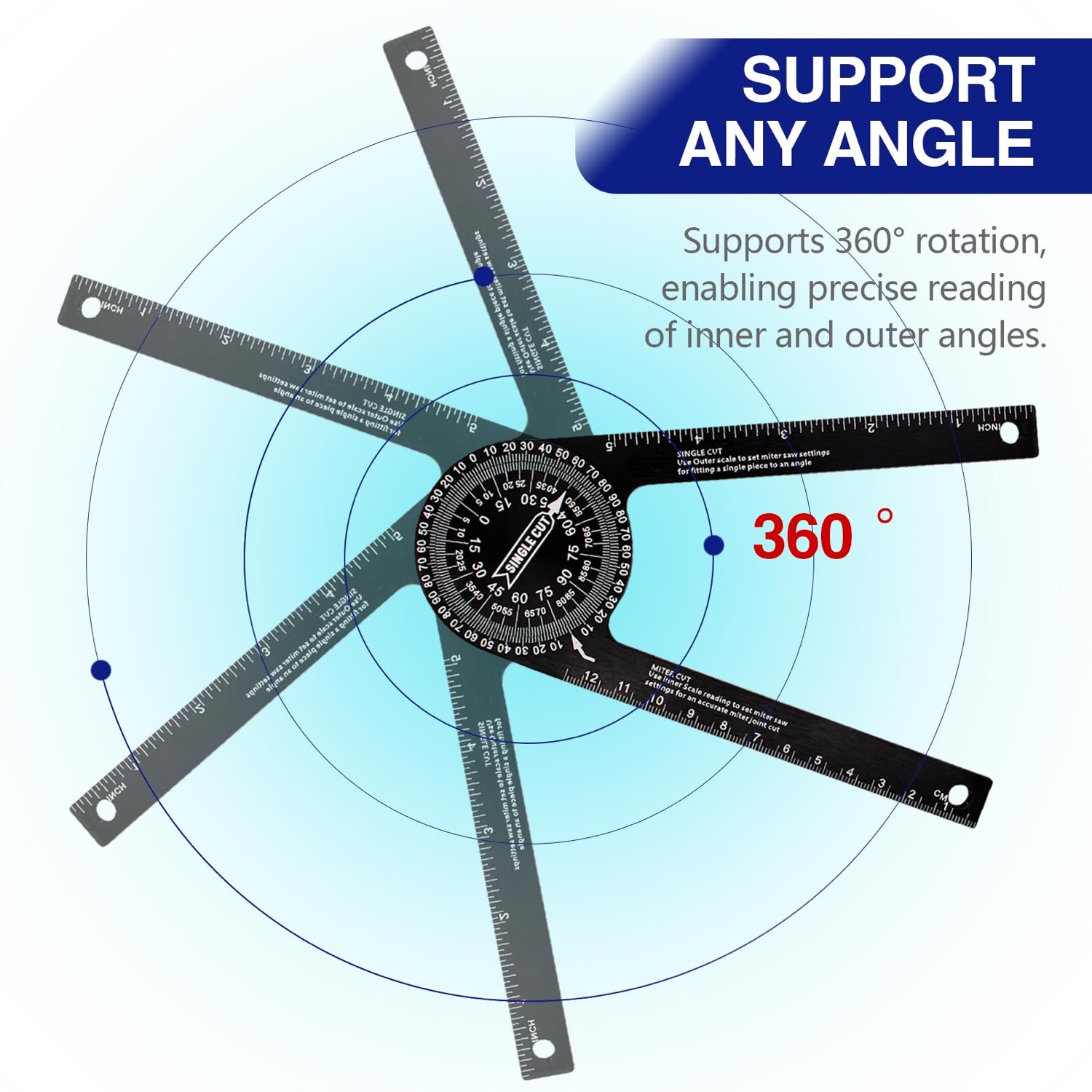
Rotation is smooth and controlled through the full 360°, so inside and outside corners read the same way.
CNC-machined aluminium alloy — not the PVC plastic most angle gauges use. It resists wear and corrosion, and the anti-scratch finish survives being thrown in a tool bag.
At 6.3 oz and under six inches long, it rides in a pocket and weighs nothing on your belt.


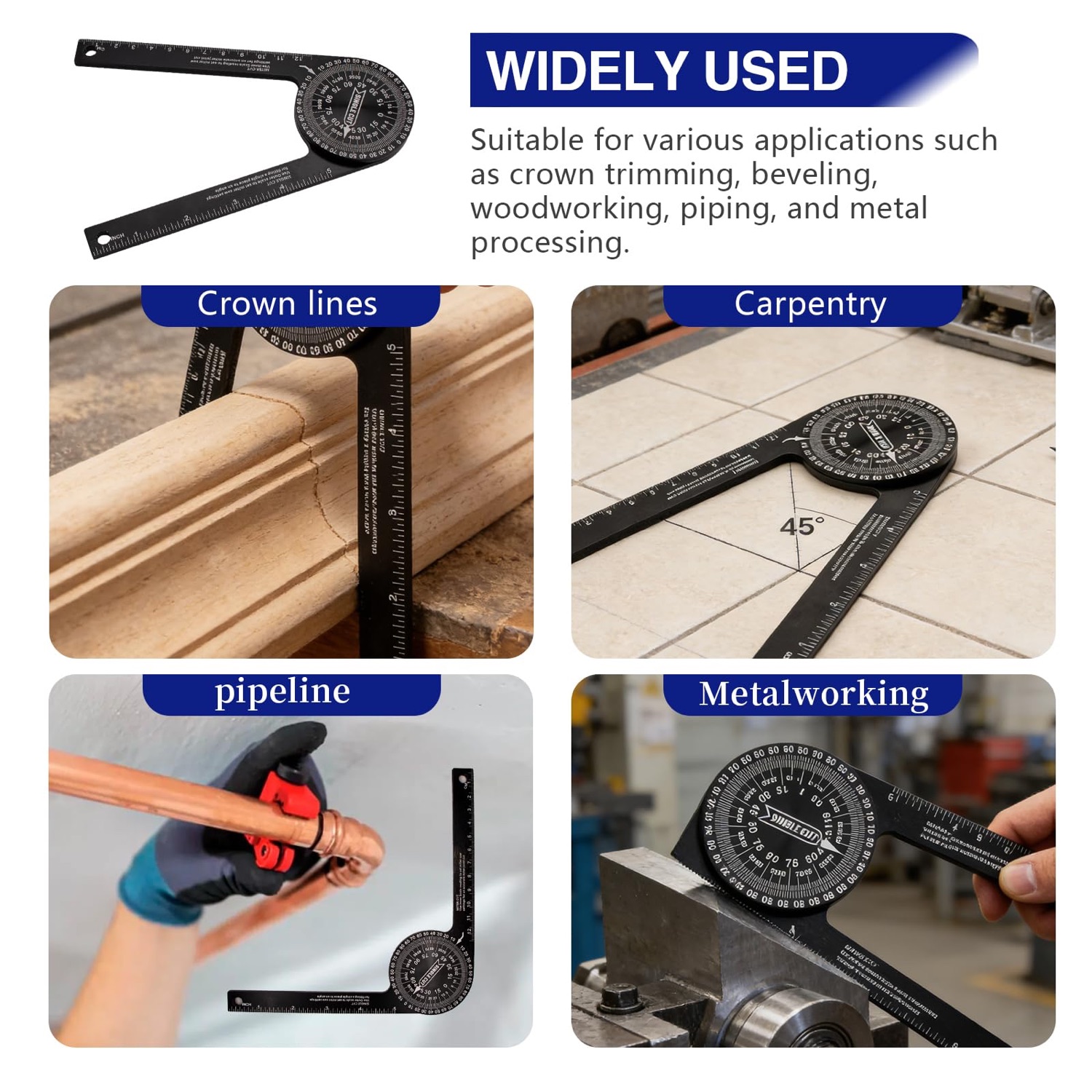
Crown molding and baseboard are the obvious jobs, but the same reading works for general carpentry, plumbing runs, metalwork and site layout.
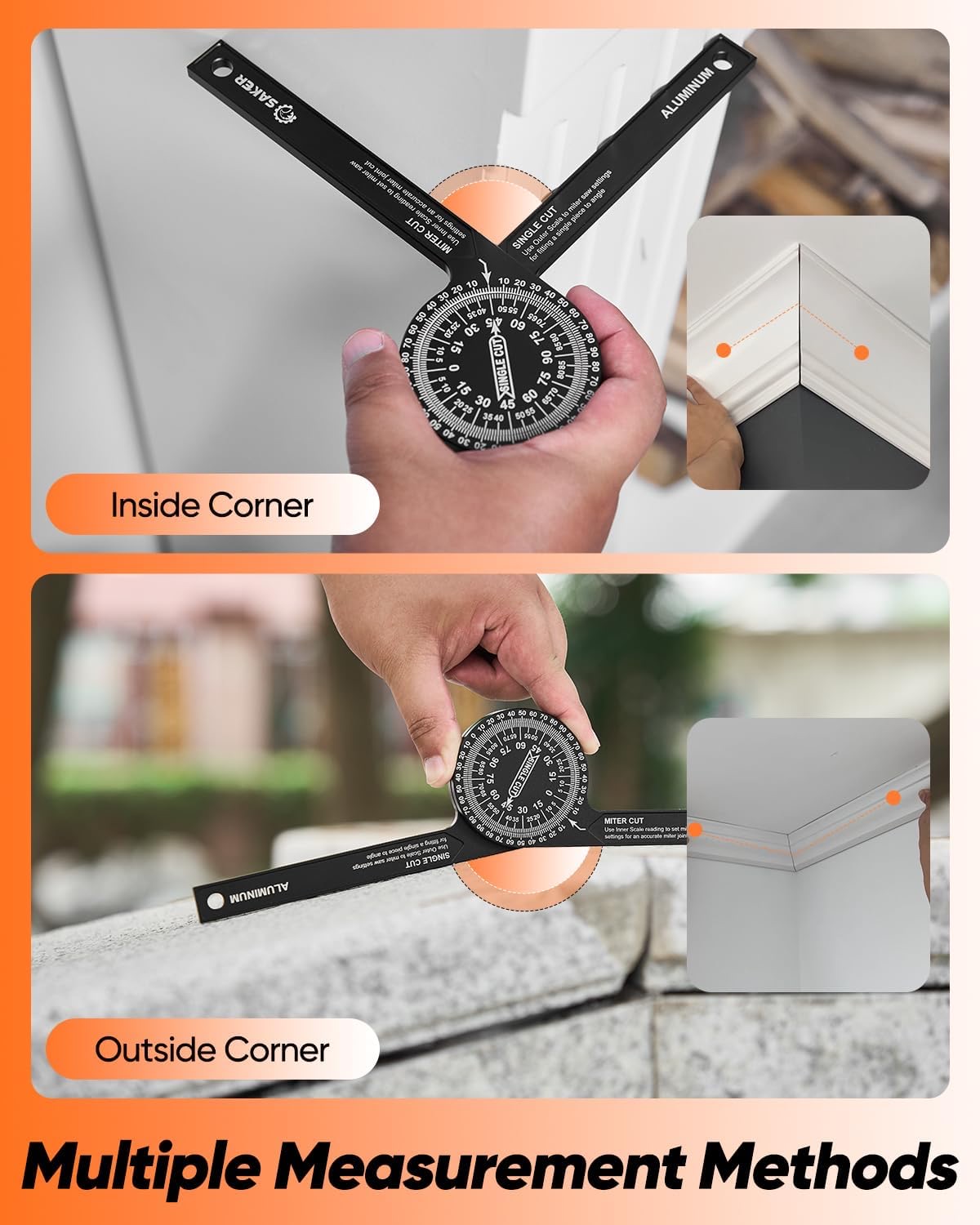
Because it reads both inside and outside angles, you're not reaching for a second gauge when the corner turns the other way.

1. Set it in the corner
Open the arms and press the frame flat against both surfaces so it sits flush.
2. Read the scale
Take the miter angle straight off the engraved graduations — inside or outside.
3. Dial the saw and cut
Transfer that number to your miter saw. No halving, no conversion table.
No. The scale gives you the miter angle to set on the saw. That is the whole point of the tool — no halving and no calculator.
Readings land within about 0.5 degrees, which is well inside what a miter saw can hold on trim work.
Yes — that is exactly what it is for. It measures the corner as actually built, not as the plans assumed.
Both. The frame rotates a full 360° and reads internal and external angles.
CNC-machined aluminium alloy with an anti-scratch finish — wear-resistant and rust-proof, unlike the PVC plastic gauges.
No. It measures 5.9 × 1.2 × 3.9 in and weighs 6.3 oz, so it fits in a pocket or pouch.